
What Is RankBrain?
RankBrain is Google’s AI approach to SEO. Google has sent a clear message that it has transitioned from a search first company to an AI first company. This is not a mere marketing slogan. This transition has a major impact on the future of digital marketing, marketers themselves, search engine optimization and businesses overall.
Google Traditionally A Search First Company
Google rose to success based on its far superior search engine algorithm centered around PageRank and the importance of backlinks . The origins of Google can be traced to the Ph. D research of Larry Page and Sergey Brin, the founders of Google, which they christened Backrub.

The algorithms that formed the backbone of Google lexical search engine algorithm, depended on various signals like links and keyword rich content. The classical informal retrieval system had several other factors in the mix and formed the ranking algorithm that ranked the most relevant search results in response to users’ search queries.
As keywords formed such an important factor in the entire scheme of things, the concept of vector spaces formed a critical part, in particular, the dot product of vectors.
Each search query is a vector and it is then compared with Google’s repository of pages with very similar vectors. Their dot product in ascending order was a key factor for relevance that resulted in the final ranking of the pages.
This coupled with number of backlinks pointing back to a site was another critical factor that boosted the rankings of a site.
Panda and Penguin – Google’s Response To Abuse Of Its Search Algorithm
Google was very transparent with the public about their ranking algorithms. The negative side of human nature, in the form of unscrupulous marketers and hackers, started creating doorway pages (special keyword stuffed pages meant only for search engine bots but not visible to humans) to rank high in the Google SERPs.
Backlink building software that built thousands of links overnight to a site and link farms or sites with backlink heavy thin content pointing to original site were rife on the web. The sole purpose of the existence of such poor quality sites was to feed the parent site with tons of backlinks to game the ranking algorithm.

The situation became so dire that Google’s top rankings were just junk spammy pages with no value. This left users frustrated without getting meaningful answers to their queries, leaving Google in a tailspin.
In 2011, Google started cleaning up its SERPs using the Panda update that brought down the spammy keyword stuffed thin content sites that had proliferated. In 2012, Google launched the Penguin update that targeted sites with multitudes of poor quality backlinks built using link farms and backlink software.
These were two huge algorithmic updates that cleaned up the search pages and returned Google to a state where its original purpose to serve top quality results for user searches was realized. Google since then has maintained a tight reign over the search sphere with regular algorithmic updates to keep its index filled with clean sites of top quality content.
Penguin 4.0
Penguin 4.0 came into existence in late 2016. It was the most sophisticated of all Penguin updates as it was built to combat spam in real-time.
This update differed from its predecessors Penguin 1.0 – 3.0 in that those were run periodically and their timing was human decision based. But Penguin 4.0 is part of Google’s core algorithm and updates in real time. This way, it takes less time to track and remove spammy results.
Impact of Semantic Search On SEO
Google has evolved from its early days by adopting advanced AI technology using Machine Learning, to shift to semantics, the process of understanding the meaning of a user search query, specifically its intent in a variety of contexts. Let us see how Google has grown to where it currently dominates the search space with about 75% of the world’s market share.
Hummingbird Algorithm
In late 2013, Hummingbird was introduced by Google as part of a complete reworking of its core algorithm. Hummingbird was designed to understand the intent behind users search queries with the help of its Knowledge Graph and semantic search.
Hummingbird Parses Search Intent
Semantic search went beyond just keywords and their permutations. It focused on the broader context surrounding the query to extract the intent even if the search was implicit/abstract. All these factors together enhanced the quality of search engine results in a big way.
Hummingbird’s improved ability to parse search intent largely due to semantic search, created a buzz when it could respond to conversational search queries, as users conversed with Google in natural spoken language. This enabled Google to tackle Voice Search queries which is growing in leaps and bounds with every passing day.
What is RankBrain And Why Does It Matter?
RankBrain is an AI program that forms a critical core of Google’s larger search engine ranking algorithm.
RankBrain, powered by Machine Learning (ML), is a smart program built by Google engineers that does not depend entirely on the traditional ranking signals and algorithmic parameters.

Instead, it uses the location and the broader context around the words that make up the search query to parse the searcher’s intent to deliver highly relevant results. In short, this machine keeps learning from contextual relevant inputs, the primary one being user behavior on the Google SERPs after clicking a listing.
This independence to elicit the intent of the search gives RankBrain complete freedom to present the most relevant listings to user search queries on the Google Search Engine Results Pages (SERPs). It also makes the ranking dynamic as RankBrain learns in real-time and adjusts the order of search listings.
RankBrain Is A Primary Ranking Factor
In Google’s evolution as a search algorithm, the two primary ranking factors throughout this journey have been links and high quality content. The very basis of the Google search algorithm revolves around linking and consequently PageRank.
Content has been another major focus of Google’s algorithm in its quest for top quality content that answers the users’ questions.
RankBrain ranks alongside both these factors as another primary ranking factor in that it does not replace Google’s algorithm. In fact, it complements the existing ranking factors and algorithms.
The ranking algorithms that numerous teams of Google engineers have tinkered with in the past by attributing different values to signals, algorithmic components and a host of other factors has now been taken over by RankBrain.
It combines these known inputs with inputs it gains by learning on its own (user behavior on clicking search listings for example) and the real time factors like location (explained previously) to list the most relevant results.
Advantages Of RankBrain
With gazillion searches being made on Google every day, the increasing incidence of phrases and words that Google has not seen before, makes it challenging. RankBrain to its rescue.
RankBrain makes an educated guess based on the context and usage of the phrase elsewhere. It does not come down to just matching search terms to the ocean of content it has in its index.
RankBrain converts the search queries into word vectors. Using distributed representation, it is able to understand unknown words by looking at the meaning of other known words surrounding this unknown phrase. These surrounding words could be much closer to each other in meaning and context.

RankBrain maps the query with unknown phrase to words/phrases it understands, or groupings of similar words. From this point, it gets a fair idea of what the user is expecting by way of intent and it provides results on this basis. This clearly proves that RankBrain understands the relationships between words and how they work together in unison.
It has been known for a while that Google tends to ignore the conjunctions and prepositions in a search query. In the light of the above facts, Google acknowledges the importance of such words and the influence they have on the user intent.
RankBrain Learns And Improves Over Time
Just as wine matures over time, RankBrain is a superior ML algorithm that learns all the time by adapting to the different types of search queries and the various associated user behaviors on clicking the search listings.
If a particular listing in position 5 gets clicked a majority of the time although there are 4 other listings ranked above it, RankBrain clearly knows that it has got it wrong in this instance and by learning corrects itself dynamically to make sure that the current position 5 ranking ascends to the top.
This dynamic self-learning process without any human intervention or assigning values to fixed signals/algorithmic parameters enables real-time algorithmic testing and leads to huge improvement in search results. This also weeds out low quality content and prevents the gaming of the system.
The Underlying RankBrain Hardware
RankBrain works using a Tensor Processing Unit (TPU). This is an AI specific hardware custom developed by Google for Machine Learning pursuits.

According to Google’s documentation
“Tensor Processing Units (TPUs) are Google’s custom-developed application-specific integrated circuits (ASICs) used to accelerate machine learning workloads. TPUs are designed from the ground up with the benefit of Google’s deep experience and leadership in machine learning.”
RankBrain’s Performance Per Google Scientist
Greg Corrado, a senior research scientist at Google, confirmed on Bloomberg
“I was surprised. I would describe this as having gone better than we would have expected.”
Google’s Plans for Future
Google has diversified extensively over the years and has its fingers in several pies. It makes smartphones, autonomous cars and apps like Google Lens. The one common thread running through all these innovations is Machine Learning in one form or the other.
Self driving cars
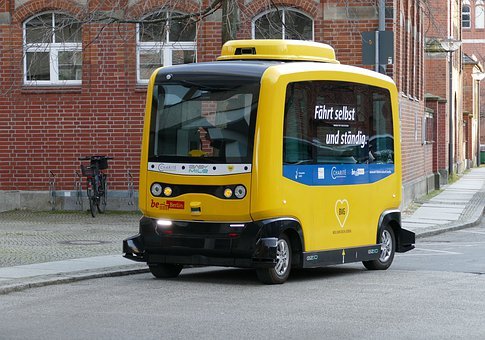
AI enables navigation of autonomous cars on busy roads and handles real-time complicated situations that arise when driving. AI software in combination with IoT sensors like cameras ensures the safety of the driver/passenger through proper driving and following the rules of the road scrupulously.
Google Lens
When you point a Google phone camera with Google Lens at an object in the real world, it describes the object that is going to be photographed. It can identify a huge variety of objects thanks to it being trained to identify patterns on a huge set of different objects.
Google Assistant
All Google phones come with a built-in Google Assistant, an AI driven smart technology. This virtual assistant can help you with weather reports, hire cabs, play music, answer questions and many more.
Google Assistant is driven by a combination of Machine Learning and AI, the former to understand the natural language and the latter to provide relevant results and communicate the results effectively using natural language.
Google Assistant is closely integrated with Google Search. To a question like “Who starred as Captain America?”, it gives a crisp answer Chris Evans. Using Machine Learning, it converts the question into a string, then it gets Google Search to look up the relevant answers that involves Machine Learning in the form of RankBrain.
It then uses narrow AI to extract the most useful answers from various websites and uses yet another form of narrow AI to provide the answer in natural language that is again designed to appear as general AI. All these maneuvers are carried out not on your Google phone but on the Google TPU’s located in the Google cloud.
Impact of ML & AI on Marketing
Google adopting Machine Learning and Artificial Intelligence using narrow AI as a core of its search ranking algorithm should jolt marketers out of their slumber. Google’s primary purpose is to understand your website content better so it can provide the most relevant and useful search results to its searchers.
The emphasis is no longer on the exact form and order of words that is typed in as the search phrase by the searcher. It is more about semantics, the intent of the search and the latent semantic indexing by way of related semantical terms.
It is about using semantic search to parse the intent from voice searches that is exploding day by day as users ask questions to Google given its gradual mastering of the spoken natural language.
Google’s Bets Are On AI and ML
Google is betting huge on AI and ML and has positioned itself as an AI first company although search is still its flagship feature.

AI Assistants are going to be the order of the day in future. Google wants its own Google Assistant to be the premier assistant. Its success lies in delivering its Google Assistant into the hands of as many users as possible world over.
Users are aware of the natural language skills of Google and are talking more and more to it, asking questions and getting answers. Typed search queries are going to reduce dramatically over time. People will be asking their phones and Google Home all the questions they need answers for.
It is time all digital marketers heeded these signals and started preparing for a world of voice search queries. A start in this direction can be having questions in every piece of useful content a site produces. Along with the right schema markup, Google will be able to give credit to your site as it lists your answer on the SERPs under the section People Also Ask.
At Traffic Alignment, we provide search engine optimization services to small businesses, helping them scale the Google search scape peaks and getting better visibility for their products/services. Contact us today with your business queries.
Related Posts













Leave a Reply