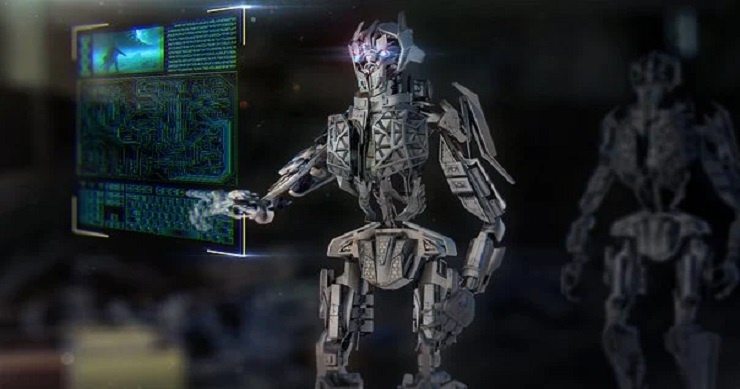
What Is AI and ML?
Artificial Intelligence and Machine Learning are the at the core of today’s explosive technology advancements. They are both interconnected although they are distinct terms, often confusing the populace at large. They cannot be used interchangeably. Like ML, some other AI technologies include Big Data and Predictive Analytics.
What Is AI?
Artificial Intelligence (AI) is a combination of hardware and software that is designed to act and appear intelligent. It performs duties that are well within the ambit of humans, like making sensible choices and managing activities autonomously without human intervention. Siri, Alexa, Google Home are some example s of AI technologies as of date. It is a continuously evolving field.
According to Andrew Moore, Former Dean of School of Comp Sc. at Carnegie Mellon
“Artificial intelligence is the science and engineering of making computers behave in ways that, until recently, we thought required human intelligence.”
Types of AI
AI is classified into three types – Narrow AI (ANI), General AI (AGI) and Super AI (ASI).
Narrow AI (ANI)
Narrow AI is used to develop software that outsmarts humans in a very narrow field to solve a specific problem. It can simulate very limited set of specific human behaviors which are pre-programmed by humans. If the task changes, then ANI will not be of any help as the software needs to be reprogrammed.
Examples of ANI
Google Assistant, Alexa and Cortana are great examples of Narrow AI.

Similarly, self driving cars, Google’s Search Engine algorithms, recommender systems on Netflix and Amazon that prompt new movies or products based on your past browsing history, helping treat a particular disease, these are all excellent examples of ANI.
Turing Test
Alan Turing, a British mathematician and computer scientist, considered the originator of modern day computing, defined a test which loosely stated is – If an AI software interacted with a human and the human could not determine if it was AI powered, then the AI entity is capable of thinking like a human.
General AI (AGI)
When an AI entity reaches a level where it can think all round at the same level as a human, then it is considered to have reached Artificial General Intelligence level.
In other words, General AI powered machines have the ability to process available information like humans in any kind of real world situation and arrive at an independent decision.
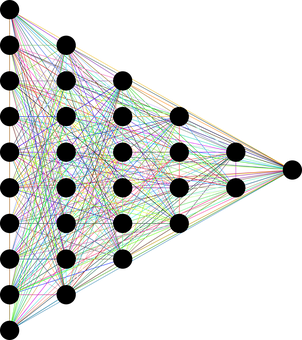
Autonomous learning and problem solving is the forte of humans. Our brains are so complex with several billions of neurons. Computer architecture also simulates learning through neural networks.
The technology to simulate AGI through whole brain emulation consists of transferring a brain’s memory to a computer. But the processing power is not available to reach this state of brain simulation. Human consciousness is another powerful factor that needs to be artificially developed in machines.
In late 2019, Google announced it has achieved quantum computing supremacy through its 54-Qubit Sycamore processor that can do a calculation in 200 seconds which would have taken the world’s most powerful supercomputer 10,000 years.
AGI Within Reach by 2030
According to this article in Superposition, Ray Kurzweil, Google’s Director of Engineering has made a bold prediction that by 2030, AI will reach the level of human intelligence.
Kurzweil predicts that Turing test will be passed without problems as we cannot differentiate between a piece of AGI software and human intelligence. The final form this AGI entity will take is unknown at this point of time.
Kurzweil has been accurate in his previous predictions about explosive growth of the World Wide Web, an AI software beating a human in chess etc. Only time can tell if his prediction comes true.
Example of General AI
It is only possible to hark back to fictional figures like Skynet in Terminator who closely resembles AGI. With advanced robotics at play in many fields of science, perhaps they come closest to a good AGI example in 2020.
Deep Mind Vs Watson
An AI shaping up to be a good AGI in future is Google’s DeepMind. DeepMind is a powerful neural network that has “general learning algorithms” at its core to learn a massive set of different skills.
This DeepMind Alphago AI entity defeated the world champion, Ke Jie in the game Go in 2017. Go is a game played on a 19×19 grid where players take turns to place stones to take control of most territory possible.
DeepMind AlphaGo won the three match series 2-0. Scientists have lauded this AGI in mastering Go but it is yet to go a long way in mastering general intelligence. Go is far more complex than chess to master using AI principles but DeepMind has proved it can think and respond to a developing situation using a Convolutional Neural Network (CNN).
IBM’s Watson is a pre-programmed AI, based more on a flowchart system. It tends to answer questions with the same answer every time.
Unlike Watson, DeepMind has shown behaviors that have been reinforced by making it learn several hundreds of Go games. Human brains works on the basis of Cognitive Behavioral Psychology where we have internal dialogues and models for thinking things through.
Super Artificial Intelligence (ASI)
Going beyond the realms of AGI delving into the fictional ASI state where AI machines exceed human intelligence, is not only scary but also a fantasy at this point of time. Machines will not only outperform humans in every possible department, they are also expected to display emotions and have relationships.
Stephen Hawking has stated that creating thinking AI machines (at ASI and even AGI levels perhaps) pose a very threat to the existence of humankind.
Source: https://www.bbc.com/news/technology-30290540
Elon Musk has been warning of the existential threat to humanity even back since 2014. He said AI will make jobs pointless.
Source: https://medium.com/swlh/elon-musk-the-dangers-of-ai-47ed12b6c34e
ASI is still a pipedream today as it requires massive computational power and almost incredibly massive amounts of data to make AI entities far superior to humans.
David Chalmers, a famous cognitive scientist, believes that once AGI is achieved, it is only a matter of time before the transition to ASI happens in terms of capabilities and efficiency.
Chalmers sates:
What happens when machines become more intelligent than humans? One view is that this event will be followed by an explosion to ever-greater levels of intelligence, as each generation of machines creates more intelligent machines in turn. This intelligence explosion is now often known as the “singularity”.
Source: http://consc.net/papers/singularity.pdf
Machine Learning

What Is ML?
Machine Learning (ML) is a distinct subsidiary of AI, wherein it trains a software on huge datasets by studying the data and comparing it to find common patterns. This continuous experiential learning helps ML gain complex knowledge impressive enough to provide magical solutions to complicated real world problems.
According to Tom M. Mitchell, Computer Scientist and ML pioneer at Carnegie Mellon
“Machine learning is the study of computer algorithms that allow computer programs to automatically improve through experience.”
There are two major types of machine learning, Supervised Machine Learning and Unsupervised Machine Learning.
Supervised Machine Learning
Supervised learning is when we know the input variables x and the output variable Y. The underlying algorithm is used to learn the mapping function from x to Y as in Y = g(x)
As the algorithm continues learning over the various inputs, it will reach a stage where the mapping function g can predict the output variables for new input data. Past experience in collecting output data helps optimize performance criteria.
Example of Supervised Learning
Solving a classification problem when the input variable is used to predict an output variable that is a category – black or white, fraud and not fraud.
Solving regression problem when the output variable is a continuous value, such as weight or height
Unsupervised Machine Learning
Unsupervised learning is when we know only the input variables x and the output variable is unknown.
The model is allowed to work on its own to discover all the underlying patterns in the data. It finds features that can be useful in categorization.
Example of Unsupervised Learning
Solving clustering problem where the grouping inherent in a data set is discovered. An example is identifying fake news item from a bunch of news stories.

Solving association problem where there is a discovery that large groups of the data set are governed by rules. An example is why certain items are bought together by shoppers than others as in milk and eggs.
Example of Machine Learning
Machine learning involves training an AI entity (software). Let us take the example of Computer Vision.
Computer vision enables machines to understand visual information. If you have Google Lens installed on your phone, when you focus the camera on any object, Lens can describe the object, be it a chair or a car.
The software for Lens would have been trained extensively by analyzing hundreds of thousands of different objects. It is trained to look for patterns in the data which helps it identify similar objects in future.
A classic case is facial recognition software. For the most part, the ML algorithm is trained to identify that human faces are oval shaped with patch of hair on top. It can identify any oval shaped object with a patch of hair on top as a possible human face.
Machine Learning has massive positive implications for digital marketing which we will explore in forthcoming blog posts.
At Traffic Alignment, we provide content marketing and seo services to small businesses that can help them gain traction on the search engines and build a solid foundation for high quality organic traffic source. This involves a very modest spend on social media every month. Give us a go today!
Related Posts












Leave a Reply