What Is A Chatbot AI?
Chatbot AI is a miniscule or narrow AI software that you find popping out in the form of a chat window when you land on a website. It simulates human conversation by engaging you with a warm greeting and asks how it can help you. You can reply by typing in text or by voice.
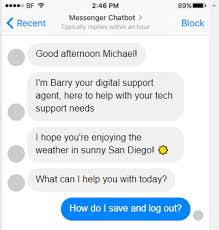
Source: uxplanet.org
These chatbots or virtual assistants are trained using AI techniques like machine learning (ML) and natural language processing (NLP) with the uncanny ability to parse the meaning of words/phrases to understand the intent, the hallmark of semantics.
Again, all chatbots are not created equal. It comes down to the type of problem they are built to solve. They can range from basic chatbots to advanced virtual assistants.
What Are Different Types Of Chatbots?
Rule Based or Button Based Chatbots
Such bots provide ready made answers to extremely specific questions. In general, button based bots are like the traditional flow charts where at every step, a decision has to be made – either True or False. If True, go a certain way. If False, go another way. These are decision tree hierarchies.
Chatbots With Built In Intelligence
These are chatbots that are trained to recognize keywords using narrow AI technology. As users type in keywords, the chatbot tends to recognize them and throw up answers. The input words trigger the answers.
Based on the user’s response, if the bot is unable to comprehend the word used (which it may not have been trained on), then it defaults to the button type menu where it leads the user on an interactive FAQ session.
This is a hybrid model as the level of natural language understanding of this miniscule AI may not be of the highest quality. If it cannot understand the words, it defaults to a decision tree model.
AI Chatbots That Understand Semantics
These chatbots are more complex and trained well on large datasets. They can be considered a combination of rule based and intelligent bots used to tackle user problems.
These contextual bots use Machine Learning, Natural Language Processing and AI to “learn” and “understand” the intent behind user queries by parsing them using semantics.
They are continuously improving based on what they learn from various user interactions, especially the what and the how aspects of conversations.
How Do Chatbots Work?
Chatbots engage in conversation with humans, a fascinating area of research of human-machine interactions.
The request from the user is first analyzed by the chatbot. It uses the words, phrases and idioms it was trained on and uses the contextual relevance (semantical) to extract the relevant response along with associated entities.
When the chatbot responds, it can be as simple as retrieving a piece of information from the database by matching it with a keyword contained in the query. It can also be a complex response “learnt” from the previous few conversations in the same session. This is machine learning at its classical best.
Applications Of Chatbots
Chatbots have been hugely successful in the area of customer service. As the narrow AI driven chatbots engage with the customers, they can provide answers to easy customer questions like working hours, days when the company is open for business etc.
If the query from the user is ambiguous, one that it cannot discern easily, the chatbot ends up guiding the user to the FAQ section or the knowledge base area of the site by serving up the appropriate link in the chat window.
Even after business hours, the company is still operating efficiently by answering the basic customer service questions. If the chatbot is more advanced, using deep learning, it is able to comprehend the quirks/complexities of the human language and learns to navigate even complex areas of the human-machine interaction landscape.
At the end of the day, there are going to be situations where the chatbot is going to have an epic fail. This is a natural consequence of trying to linearize a non-linear interaction. Humans have to train and optimize the AI software repeatedly over time to master the complexity of language and human interaction.
Let’s look at some applications where chatbots have been successful.
Chatbots In Marketing
Depending on the complexity levels reached in training chatbots, they can engage customers and end up collecting leads – in the form of name and email address.
Source: chatbotslife.com
Chatbots are also replacing the traditional contact forms on websites used to collect user information.
Instead, they offer visitors variety of options that leads them to taking different actions, from directing visitors to the appropriate help sections on the site and basic newsletter signup to advanced techniques of lead nurturing like offering a free demo.
For more advanced AI chatbots, additional smarts like providing appropriate recommendations to visitors based on their previous browsing/buying history entices humans to take action on familiar things they have already gained knowledge of, on their previous visits.
Chatbots In Customer Service
Chatbots aid in customer services in a variety of ways.
Non Stop Customer Service
With a 24/7/365 functional website and visitors from different time zones on the site at all hours, chatbots provide a major relief to human customer service reps by engaging with customers and getting basic lead information like name and email. This leaves a lasting impact on visitors who would otherwise be frustrated at not finding someone to answer their questions.
Company $$ Savings
The monetary benefits are incredible considering the fact that chatbots work tirelessly on end to help visitors with their basic queries. This saves the company mega $$$ and shaves a large chunk off company expenses if humans had to be hired for different work shifts.
Time saved is money saved. Chatbots save incredibly on time that humans would otherwise have spent pursuing mundane tasks.
Non-Intrusive Service
Advanced chatbots with better training can be more functional in collecting leads and leading visitors deeper into the sales funnel.
Multi-language support and handling repetitive tasks without getting tired or breaking down adds to the advantages that chatbots offer in customer service.
Attending To Sales Enquiries
With a majority of sales enquiries for all kinds of brands happening on social media, chatbots have become very effective in answering these queries. Customers have questions during multiple stages as in before actual purchase, during the purchase process and post purchase as well.
Chatbots provide timely answers keeping the customers happy and solving problems for the company simultaneously.
Facebook Chatbots (aka Facebook Messenger Bots)
A few interesting facts on Facebook Messenger bots:
Facebook Messenger is the third most used app in the world with around 68% users globally.
Source: https://www.businessinsider.com/most-used-smartphone-apps-2017-8#3-facebook-messenger-8
Users are convinced that messaging is the second best way to communicate with a business. They use FB Messenger to exchange 2 billion messages every month with businesses.
Source: fb.messenger.com
There are around 300,000 active FB messenger bots today.
Source: https://blog.messengerdevelopers.com/messenger-at-f8-2018-44010dc9d2ea
Investing in a Facebook messenger bot is worth the money. There are numerous providers online who can build it for you using Facebook’s Application Programming Interface (API). It is cheaper than building a mobile app.
Want to build a Facebook bot by yourself? Check this blog post
Benefits of Using FB Chatbots
Small Businesses Breaking The Technology Barrier

A small business can build a chatbot using FB messenger at no to low cost. They can provide customer service at all hours on their website to visitors like the other big boys in the game. A small business with a Facebook account has ready access to 1.4 billion FB users.
Imagine a catering business that can serve customers who order food via FB messenger after answering a few automated questions. The ordering process is so direct and seamless. The same goes for legal advice where asking a few questions provides the customer the necessary answers without having to make an appointment to speak to a specific legal professional.
Chatbots are widely prevalent in a swathe of businesses like real estate, mortgage loan calculators, personal development, investment, politics and making appointments. Chatbots are also referred to as virtual assistants as they do the basic level jobs of humans.
At Traffic Alignment, we understand the search marketing needs of small businesses and help them gain a foothold in the online arena by promoting their products/services well. Contact us to get more details.
Related Posts


















Leave a Reply